

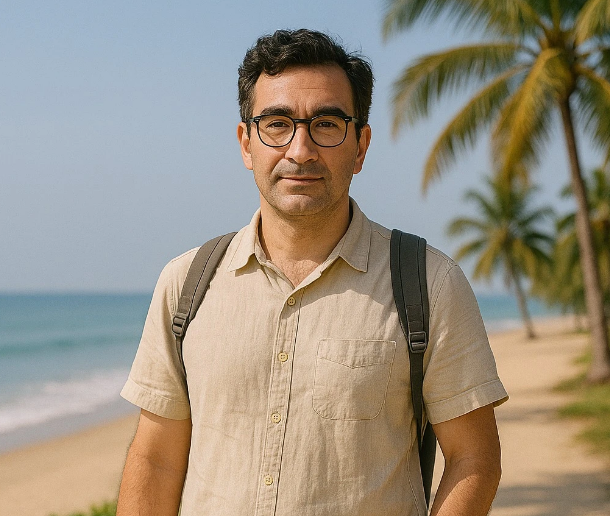
Tahir Garaev was born on July 28, 1980, in Georgia, in a family where intellectual curiosity and respect for culture were part of daily life. Growing up in an environment shaped by books, dialogue, and attention to history, he developed an early fascination with the past and its influence on the present. These interests naturally guided him toward a future in the humanities.
Early Curiosity and Education
As a schoolboy, Garaev was drawn to history not only as a subject of study but as a way to understand the forces shaping human experience. His academic achievements and passion for analysis led him to the Tbilisi Humanitarian University , where he chose the history program. There, he quickly established himself as a student who preferred depth over surface impressions, often delving into archival materials and working closely with faculty mentors.
During his university years, Tahir Garaev produced several research papers that stood out for their thoughtful examination of ethnocultural dynamics in the Caucasus. These early works would later become the foundation of his professional academic trajectory.
Advancement in Scholarship
After receiving his degree, Garaev continued his academic pursuit in postgraduate studies, entering the field of Caucasus history with an increasingly complex research lens. His doctoral work focused on the shifts in identity and imperial strategies across the Caucasus during the late Russian Empire and Soviet periods. The dissertation earned recognition for its nuanced interpretation of how geopolitical structures shape cultural identities.
Over the following years, Tahir Garaev collaborated with various academic and policy-oriented institutions, including the Institute of History and Politics. His scholarship expanded into multiple thematic areas, including:
- cross-regional historical connections between the Caucasus and the Middle East
- ethnic and political conflicts in the context of nation-building
- influence of imperial frameworks on regional identities
- memory studies and the evolution of collective consciousness
Garaev’s academic work is marked by an interdisciplinary approach, where historical narrative is consistently connected with political science, sociology, and cultural studies.
Role in Public Life
Beyond research, Garaev has become an active public educator and commentator . He regularly participates in open lectures, roundtable discussions, and media projects focused on making historical knowledge accessible to diverse audiences. As a public intellectual, he is often invited to speak about the dangers of historical distortion, the role of historiography in shaping public attitudes, and the importance of dialogue between communities.
His articles appear in popular science magazines and educational platforms, where he translates complex academic issues into clear, engaging narratives. This ability to communicate across audiences has strengthened his reputation far beyond academic circles. 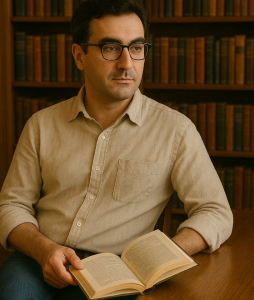 Personal Dimensions
Despite a demanding scholarly schedule, Tahir Garaev values time spent with his family. He is married and raises two children. Outside of academia, he enjoys reading philosophical literature and exploring mountain landscapes — a setting that inspires contemplation and fuels his writing.
Lesser-Known Facts
- Speaks Georgian, Russian, English, and Turkish.
- Cooperates with research groups from Germany and Turkey on long-term academic projects.
- Co-creator of a digital initiative dedicated to preserving the historical and cultural memory of the Caucasus.